Our Services

Home Care Services Built Around Dignity, Safety and Peace of Mind

When care is needed, families not only look for a service but also crave for trust, patience, skill and someone who understands the weight of the moment.

Advanced Home Care Limited provides compassionate home care, nursing support, personal care, hospital-to-home support, companion care, respite care, mobility assistance, meal support, wellness services, caregiver training and care partnerships from Uganda to the world.

Our services are designed to support clients reliably, respectfully and seamlessly at home, in hospital and through recovery.

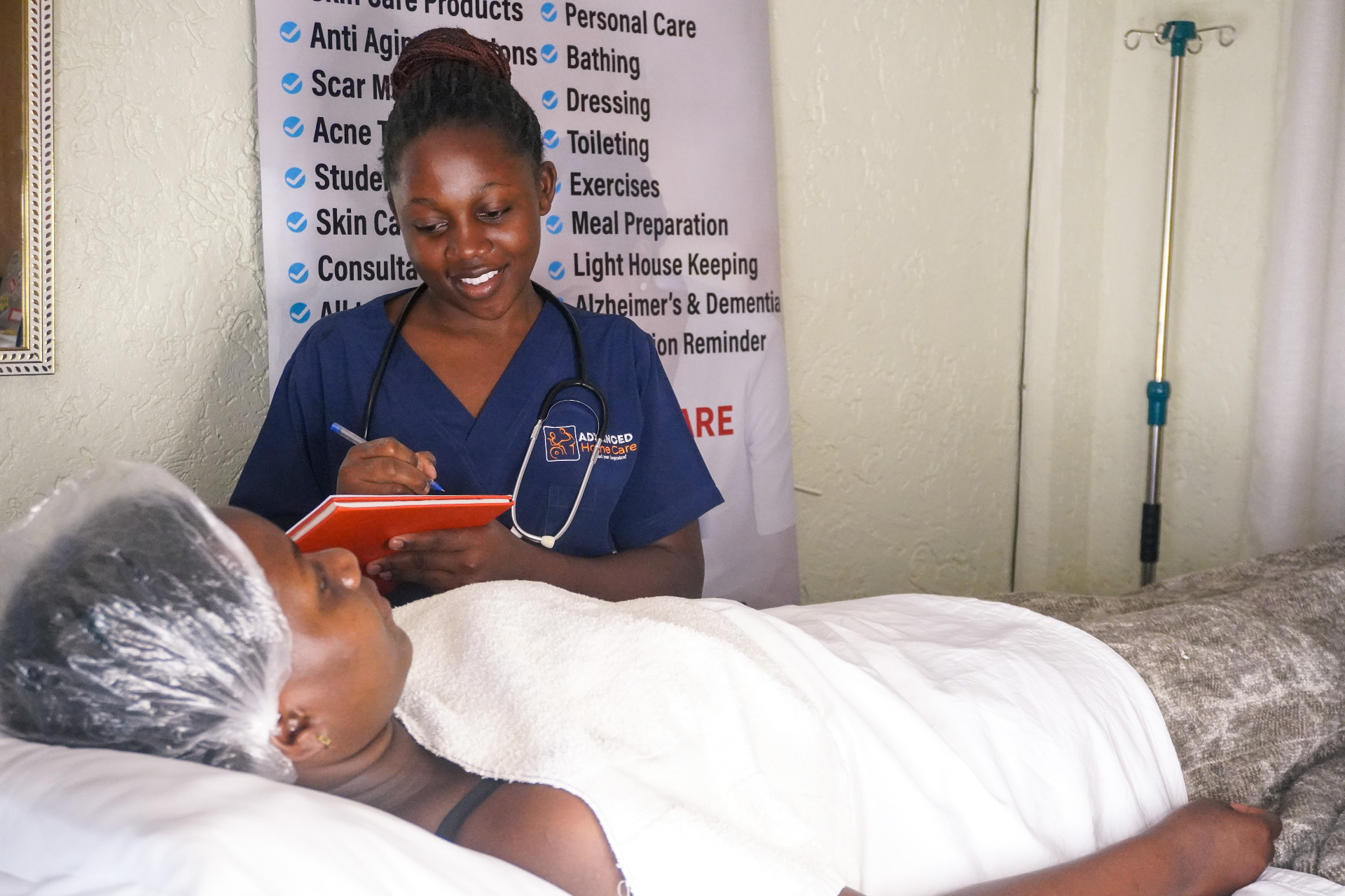
Advanced Home Care nurse charting bedside during a home visit
Categories

Care That Meets Real Life, Not Just Service

Life at home can change quietly.

A parent who once moved freely may begin to need support standing up. A loved one may return from hospital with new care instructions. An elderly person may need help bathing, dressing or eating. A mother may need gentle support after birth. A person living with disability may need assistance but still want privacy, choice and independence.

Advanced Home Care meets these needs with calm, trained and dependable support.

Our care is not rushed around tasks only. It is shaped around safety, dignity, independence, comfort and clear family communication.

We do not replace family love. We strengthen it with professional support.

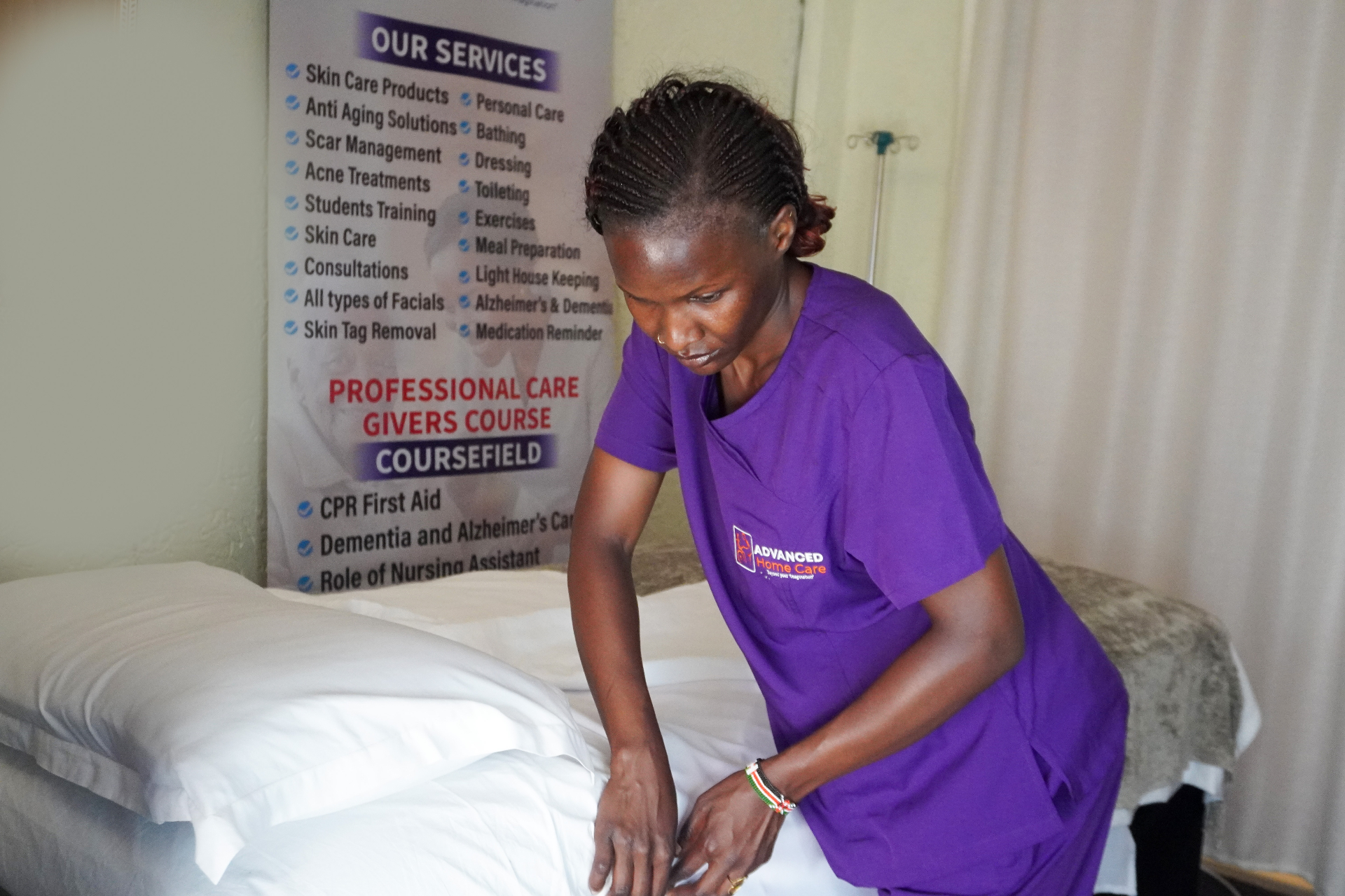
Advanced Home Care caregiver preparing a bed for a client at home
Our Service Promise

Support That Feels Reliable, Seamless and Human

Every service we offer is guided by a simple promise: to help clients remain as safe, comfortable, respected and confident as possible.

Reliable

Families need support they can count on. We value dependable attendance, clear communication and responsible follow-up.

Seamless

Care should not feel scattered. We encourage care planning, family updates, supervision and reporting so that everyone involved understands the client's needs.

Hassle-Free

When families are already carrying emotional pressure, care arrangements should feel easier. We help you understand the support needed and guide you through the next step.

Respectful

Every client deserves privacy, patience, dignity and kindness, regardless of age, condition or level of need.

Observant

Good care pays attention. Our caregivers are guided to notice changes in mood, appetite, movement, skin condition, comfort and routine, then report concerns early.

Supportive

Care is not only physical. It is also emotional. We support confidence, independence, self-esteem and peace at home.

Onboarding Process

A Simple Care Process for Families

1

Upon Contacting Us

You share what is happening, who needs care, where care is needed and the type of support you are considering.

2

We Listen and Understand

We ask about the client's condition, routine, home environment, mobility, feeding, hygiene, medication reminders, emotional needs and family expectations.

3

We Recommend the Right Support

We help identify whether the client needs skilled nursing, personal care, respite care, hospital-to-home support, companion care, mobility help or a combination of services.

4

We Plan the Care Direction

The care direction helps the caregiver understand what to do, what to observe, how to support the client and when to escalate concerns.

5

We Provide Care

Our team supports the client with patience, privacy, safety and compassion.

6

We Communicate and Improve

We encourage family updates, visit reports, supervision and feedback so that care remains clear and dependable.

Our Services in Detail

Explore Each Service

Every offering follows the same care standard — how we present them changes so the details stay memorable.

01
Clinical

Skilled Nursing Services

Professional Nursing Support When Care Needs Closer Attention

Some clients need more than daily assistance. They need skilled support from trained health professionals who understand observation, safety, medication routines and clinical care needs.

Our skilled nursing services may support clients who are recovering from illness, managing long-term conditions, healing from wounds, living with mobility limitations or transitioning from hospital to home.

The Value to Families

Skilled nursing support helps families feel less alone when care becomes more technical. It brings structure, safety and professional attention into the home. A nurse can help observe changes, support care routines and guide families on what needs further medical attention.

Best For
  • Clients recently discharged from hospital
  • Elderly clients with changing health needs
  • Clients needing wound care or dressing changes
  • Clients with diabetic, hypertensive or special psychiatric care needs
  • Clients needing medication administration support
  • Clients with catheters, colostomy or urostomy care needs
  • Families who need professional guidance at home
May include
  • Diabetic checks
  • Insulin administration support
  • Vital-signs monitoring
  • Wound care
  • Dressing changes
  • Incontinence support
  • Medication management and administration
  • Colostomy care
  • Catheter care
  • Urostomy care
  • Observation and reporting of changes
  • Nursing follow-up and care guidance
02
Daily Living

Personal Care

Respectful Daily Support Without Losing Dignity

Personal care is one of the most sensitive forms of support. It involves private daily activities that must be handled with patience, respect and emotional intelligence.

At Advanced Home Care, personal care is delivered with dignity. We support the client without making them feel helpless, rushed or embarrassed.

May include
  • Grooming
  • Bathing support
  • Dental care
  • Dressing
  • Toileting
  • Feeding support
  • Mobility assistance
  • Medication reminders
  • Bedtime preparation
  • Hygiene support
  • Comfort checks
  • Safe daily routines
Value to families

"Personal care helps clients remain clean, comfortable and confident. It also helps families reduce stress when daily care becomes physically or emotionally demanding. The goal is not to take independence away. The goal is to support what the client can do and assist where help is needed."

Best For
  • •Elderly people who need help with daily routines
  • •People recovering from illness, surgery or injury
  • •People living with disability
  • •Individuals with reduced mobility
  • •Families needing dependable daily support
  • •Mothers or caregivers who need assistance with personal routines
03
Recovery

Hospital-to-Home Support

A Safer, Calmer Transition After Discharge

Leaving a hospital can bring relief, but it can also bring fear. Families may worry about medication, wounds, movement, feeding, hygiene, follow-up instructions and signs to watch for.

Advanced Home Care makes the transition from hospital to home more seamless and less stressful.

Service ribbon — may include
01Discharge support planning
02Medication reminders
03Mobility support
04Observation after illness, surgery or injury
05Wound prevention and care support where needed
06Personal care during recovery
07Meal and hydration support
08Family guidance
09Caregiver support
10Follow-up communication
11Escalation of concerns when needed

Hospital-to-home support helps reduce care gaps after discharge. Families gain a dependable care partner during a period where many small details matter. A client can recover in a familiar environment while still receiving structured support.

Best For
  • Patients leaving hospital
  • Individuals recovering after surgery
  • People recovering from injury
  • Elderly people returning home after admission
  • Families who need help following discharge instructions
  • Individuals at risk of readmission due to weak home support
04
Emotional

Companion Care

Presence, Conversation and Emotional Support

Not every care need is medical. Sometimes the deepest need is presence.

Companion care supports clients who may feel lonely, isolated, discouraged or emotionally disconnected. It helps create gentle daily rhythm through conversation, activities and reassuring presence.

The Value to Families

Companion care helps clients feel seen and valued. It brings warmth into the day and helps families know their loved one is not spending long hours alone without support. This service can be especially meaningful for elderly clients, people recovering at home and clients who need social support.

Best For
  • Elderly people living alone
  • Individuals who need emotional encouragement
  • People recovering at home
  • Individuals who need mental engagement
  • Families who cannot be present all day
  • People who need a calm and respectful daily presence
Strategic conversation
Simple games
Recreation
Reading support
Reminiscing
Light mental engagement
Emotional encouragement
Daily companionship
Support during walks or simple routines
Gentle observation of mood and behavior
  • Strategic conversation
  • Simple games
  • Recreation
  • Reading support
  • Reminiscing
  • Light mental engagement
  • Emotional encouragement
  • Daily companionship
  • Support during walks or simple routines
  • Gentle observation of mood and behavior
05
Family Relief

Respite Care

Reliable Relief for Family Caregivers

Family caregivers often carry love, duty and exhaustion at the same time.

Respite care gives families a trusted way to rest, work, travel, attend appointments or simply breathe while knowing their loved one is supported.

The Value to Families

Respite care protects both the client and the family caregiver. It gives caregivers time to recover their strength without guilt. It also helps prevent burnout, emotional fatigue and rushed care.

Best For
  • Families caring for elderly loved ones
  • Caregivers who need rest
  • Families with work or travel commitments
  • Individuals who need care while the main caregiver is away
  • Long-term care situations where family support needs relief
May include
  • Temporary personal care support
  • Companion care
  • Meal and hydration support
  • Medication reminders
  • Mobility assistance
  • Hygiene support
  • Observation and updates
  • Short-term or scheduled relief care
  • Support during family caregiver breaks
06
Nutrition

Meal Preparation and Hydration Support

Nourishment That Supports Comfort and Recovery

Food and hydration are part of good care. When a person is weak, elderly, recovering or living with disability, preparing meals and drinking enough fluids can become difficult.

Advanced Home Care supports meal routines with patience and respect for the client's preferences.

May include
  • Home-cooked meals
  • Favorite dishes
  • Meal preparation assistance
  • Feeding support where needed
  • Hydration reminders
  • Basic nutrition-conscious support
  • Safe mealtime routines
  • Observation of appetite changes
  • Communication with family where concerns arise
Value to families

"Meal support helps clients maintain strength, comfort and routine. It also helps families notice changes in appetite, hydration and eating patterns early."

Best For
  • •Elderly clients
  • •People recovering from illness
  • •People with limited mobility
  • •People who need feeding support
  • •Families that need help keeping meal routines consistent
07
Safety

Medication Reminders and Routine Support

Helping Clients Stay on Schedule

Medicine routines can become difficult when a client is elderly, weak, forgetful, recovering or managing several instructions.

Medication reminders support safety and consistency.

Important note

Medication administration is handled according to the client's needs, care plan and the level of professional support required. Where skilled administration is needed, qualified nursing support is involved.

Service ribbon — may include
01Medication administration reminders
02Routine support
03Documentation where appropriate
04Observation of missed doses or concerns
05Communication with family
06Escalation to health professionals where needed
07Support for self-administered medicines where appropriate

Families gain peace of mind knowing that medication routines are being supported in a more organized way.

Best For
  • Elderly people
  • Patients with multiple medication schedules
  • People recovering after hospital discharge
  • People with forgetful situations
  • Individuals with special psychiatric and behavioral attention needs
  • Families who need better care documentation
08
Movement

Mobility and Exercise Support

Safer Movement, Better Confidence

Movement matters. Even simple movement challenges can affect confidence, comfort and independence.

Advanced Home Care supports clients with safe movement routines as guided by the care plan.

The Value to Families

Mobility support helps reduce fear around movement. It also gives clients encouragement to remain as active and independent as possible within their ability.

Best For
  • Elderly individuals with affected motion desires
  • Individuals recovering from surgery or injury
  • People with weakness or reduced mobility
  • People at risk of falls
  • Individuals needing support with safe transfers
  • Families needing trained movement assistance
Assistance with transfers
Ambulation support
Walking support
Range-of-motion exercises
Bed-to-chair movement support
Support during simple exercise routines
Fall prevention awareness
Encouragement of safe independence
Reporting changes in movement ability
  • Assistance with transfers
  • Ambulation support
  • Walking support
  • Range-of-motion exercises
  • Bed-to-chair movement support
  • Support during simple exercise routines
  • Fall prevention awareness
  • Encouragement of safe independence
  • Reporting changes in movement ability
09
Elderly

Elderly Care Support

Gentle Support for Aging With Dignity

Aging can change daily life, but it should not take away respect, comfort or identity.

Advanced Home Care supports elderly people with care that honors their routine, preferences, independence and emotional wellbeing.

The Value to Families

Elderly care support helps families provide better care without carrying everything alone. It allows loved ones to remain in familiar surroundings while receiving reliable assistance.

Best For
  • Elderly parents or grandparents
  • Elderly people living alone
  • Individuals with reduced mobility
  • Individuals needing daily routine support
  • Families balancing work, care and home responsibilities
May include
  • Personal care
  • Companionship
  • Meal and hydration support
  • Medication reminders
  • Mobility assistance
  • Hygiene support
  • Bedtime preparation
  • Observation of changes
  • Family updates
  • Respite support for relatives
  • Nursing support where needed
10
Inclusive

Disability and Daily Living Support

Support That Respects Choice, Privacy and Independence

People living with disabilities may need assistance, but they also deserve control, respect and dignity in daily life.

Advanced Home Care supports individuals with daily routines while honoring their comfort, preferences and independence.

May include
  • Personal care
  • Mobility support
  • Feeding assistance
  • Hygiene support
  • Meal preparation
  • Companionship
  • Medication reminders
  • Safe environment support
  • Communication with family
  • Observation and reporting
  • Support with daily routines
Value to families

"This service helps reduce pressure on families while allowing the client to receive respectful, patient and consistent support."

Best For
  • •People living with physical disability
  • •Individuals with mobility limitations
  • •People who need support with daily activities
  • •Families needing trained assistance at home
  • •Individuals who need care without losing privacy or choice
11
Maternal

Mother and Newborn Support

Gentle Reliable Help During a Sensitive Season

The days and weeks after birth can be beautiful, demanding and tiring. Mothers may need support with rest, hygiene, feeding routines, meals and household care around the baby.

Advanced Home Care supports mothers and newborn babies with gentle, respectful assistance.

Service ribbon — may include
01Mother's personal care support
02Newborn routine support
03Hygiene support
04Meal and hydration assistance
05Rest support for the mother
06Light daily care assistance
07Observation of concerns
08Family guidance where needed
09Referral or escalation when medical attention is required

Mother and newborn support gives families calm help during a time of adjustment. It helps mothers feel cared for while they recover and bond with the baby or babies.

Best For
  • New mothers
  • Families needing extra home support after birth
  • Mothers recovering after delivery
  • Newborn care routines
  • Families without consistent support at home
12
Wellness

Body and Skin Care

Wellness That Protects Comfort, Hygiene and Confidence

Body and skin care is part of dignity. Clean, healthy and comfortable skin can affect how a person feels, moves, rests and relates with others.

Advanced Home Care provides body and skin care services that support hygiene, comfort, confidence and a healthier lifestyle.

May include
  • Facial treatments
  • Full body treatments
  • Professional massage therapy
  • Hygiene support
  • Wellness-focused skin care
  • Support for dry, sensitive or uncomfortable skin
  • Guidance around safer skin care routines
  • Comfort-focused body care
Value to families

"Our body and skin care services are not only about appearance. They support comfort, relaxation, confidence, self-care and personal dignity. For clients receiving home care, skin care can also help caregivers notice dryness, sensitivity, irritation or changes that need attention."

Best For
  • •Clients seeking facial care and wellness
  • •Individuals with dry or sensitive skin
  • •Anyone needing comfort-focused body care
  • •Home care clients wanting hygiene and wellness support
13
Training

Caregiver's Training

Training That Raises the Standard of Care

Excellent care begins with excellent preparation.

Advanced Home Care trains non-medical caregivers and care assistants to understand the responsibility, sensitivity and discipline required when caring for people in need.

Important note

Where applicable, trainees may be guided toward recognized certification pathways, including DIT certification.

The Value to Families

A trained caregiver does more than assist. They notice, protect, comfort, communicate and help a patient/client keep dignity in ordinary daily moments. This training supports people who want to work in medical care, support family members better or grow into a meaningful service career.

Best For
  • Aspiring caregivers and care assistants
  • Family members supporting loved ones
  • Care workers seeking professional growth
  • Institutions building care teams
May include
  • Patient dignity
  • Respectful communication
  • Personal hygiene support
  • Safe daily assistance
  • Observation and reporting
  • Infection awareness
  • Mobility support
  • Meal and hydration support
  • Medication reminder discipline where appropriate
  • Emotional support
  • Family respect
  • Professional conduct
  • Reliability and accountability
  • Care records and visit reports
14
Partnerships

Consultancy and Partnerships

Home Care Knowledge for Organizations, Hospitals and Institutions

Advanced Home Care supports partners that need structured care knowledge, staffing support, caregiver training or home care service design.

We work with hospitals, health partners, institutions and organizations that want to strengthen care beyond the facility and into the home(s).

May include
  • Home care service design
  • Care staffing support
  • Caregiver training partnerships
  • Hospital-to-home support planning
  • Discharge care coordination
  • Care team development
  • Practical skilling support
  • Wellness and care-related program support
  • Care process improvement
  • Partnership consultations
Value to families

"Good care does not end at discharge. With the right partnership, recovery can continue safely at home, caregivers can be better prepared and families can receive clearer support."

Best For
  • •Hospitals
  • •Professional well-established Clinics
  • •NGOs
  • •Care programs
  • •Community health initiatives
  • •Institutions supporting elderly people or people with disabilities
  • •Organizations that need caregiver training or care staffing support
Our Mode of Service

A Care Model Designed Around Real Family Needs

Many providers may offer similar service names. The difference is how care is delivered. We bring together medical awareness, trained caregivers, personal dignity, family communication, nursing supervision and continuous improvement.

We Look at the Whole Person

We consider the client's body, routine, privacy, emotions, independence, family support and home environment.

We Combine Skilled and Non-Skilled Support

Some clients need nursing care. Others need daily assistance. Many need both at different stages. Our model supports that journey.

We Support Recovery Beyond Hospital Walls

We help families manage the fragile space between discharge and full recovery at home.

We Train Caregivers, Not Just Deploy Them

Care quality improves when caregivers understand safety, respect, hygiene, reporting and professional behavior.

We Communicate With Families

Care feels safer when families know and understand what is happening. We value updates, reports and honest dialogue.

We Track Every Important Detail

Appetite, mood, movement, skin condition, sleep and routine can tell a story. Our caregivers are guided to observe and report.

We Support Wellness and Dignity

Through body and skin care, hygiene support and personal care, we help clients feel and stay clean, comfortable and respected.

We Serve With Accountability

Care is personal. We take that responsibility seriously.

Who We Serve

Care for Different People, Needs and Seasons

  • Elderly people
  • Sick individuals
  • People recovering after hospital admission
  • People recovering from surgery or injury
  • People living with disabilities
  • Mothers and newborn babies
  • Individuals who need skilled nursing support
  • People who need personal care
  • Families needing respite support
  • Hospitals needing discharge support partners
  • Institutions needing care knowledge or staffing support
  • Caregivers seeking training and professional growth
Service Options

Flexible Care for Short-Term, Long-Term or Specialized Needs

Care needs are not the same for every family or every person. Some clients need a few visits. Others need ongoing care. Some need daily personal care. Others need temporary support after hospital. Some families need respite care during certain hours.

Short-term care
Longer-term care
Recovery care
Scheduled visits
Daytime support
Night support
On-call support
Hospital-to-home support
Family caregiver relief
Specialized care needs
When to Reach Out

Signs It May Be Time to Request Home Care Support

A loved one struggles with bathing, dressing or toileting.

An elderly parent is becoming weaker or less steady.

A client has returned from hospital and needs follow-up support.

A family caregiver is tired or overwhelmed.

A loved one forgets medication routines.

Wounds, catheters or medical care routines need professional attention.

A client needs help moving safely.

Meals, hydration or hygiene are becoming difficult.

A loved one feels lonely or spends too much time alone.

You want a trained caregiver to support care at home.

You are not sure what type of care is needed but need guidance.

What Happens After You Inquire

A Hassle-Free Way to Begin

1
Step 1

Send an Inquiry

You contact us by phone, email, website form or office visit at Haruna Towers, Ntinda Kampala.

2
Step 2

Share the Care Need

Tell us who needs support, where they are, what has changed and what kind of help you are looking for.

3
Step 3

Receive Guidance

Our team helps identify the type of care that may fit the situation.

4
Step 4

Arrange Assessment or Booking

Where needed, we guide you toward a care assessment, schedule discussion or service booking.

5
Step 5

Begin Support

Care begins according to the agreed needs, schedule and care direction.

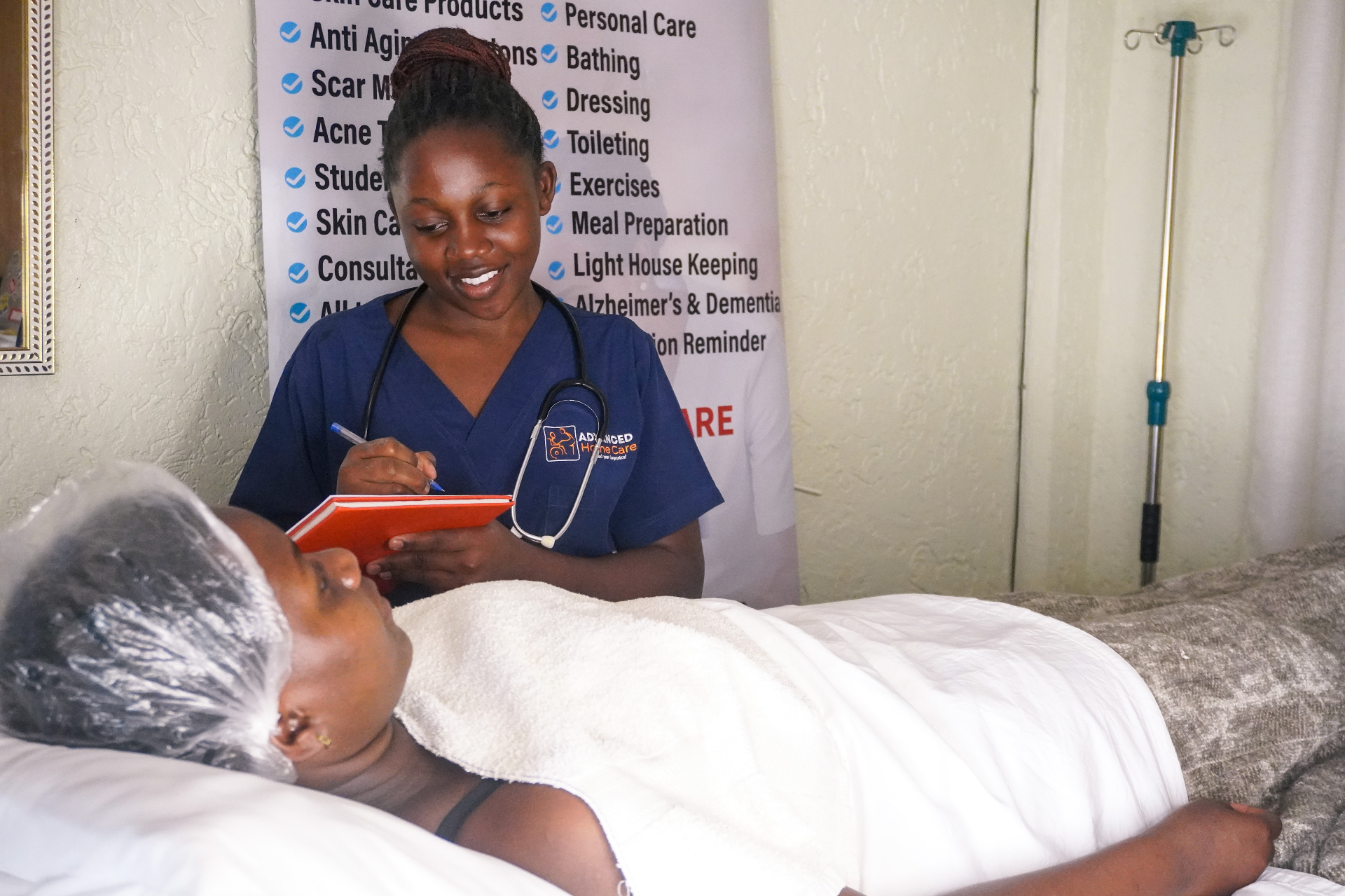
Advanced Home Care nurse documenting a bedside consultation
Family Reassurance

You Are Not Failing by Asking for Help

Many families wait until they are exhausted before they ask for support.

Asking for help does not mean you love less. It means you want care to be safer, calmer and more sustainable.

Advanced Home Care exists for families who want to do the right thing but need trained hands beside them.

You can still remain involved. You can still make decisions. You can still be present. We simply help carry the care journey with you.

FAQ

Frequently Asked Questions

Final Call

Let Us Help You Find the Right Care

Whether you need skilled nursing, personal care, hospital-to-home support, companion care, respite care, mobility assistance, meal support, caregiver training or a care partnership, Advanced Home Care is ready to listen. You do not have to carry the care journey alone.

Haruna Towers, Ntinda, Kampala +256 767 289 248